A field guide to native bees
North America
Rusty patched bumble bee
Small neighbors.
A world to discover.
Meet the native bees sharing our yards, balconies and schoolyards.
Meet this beeLook a little closer
Native, not new
Not just honey bees.
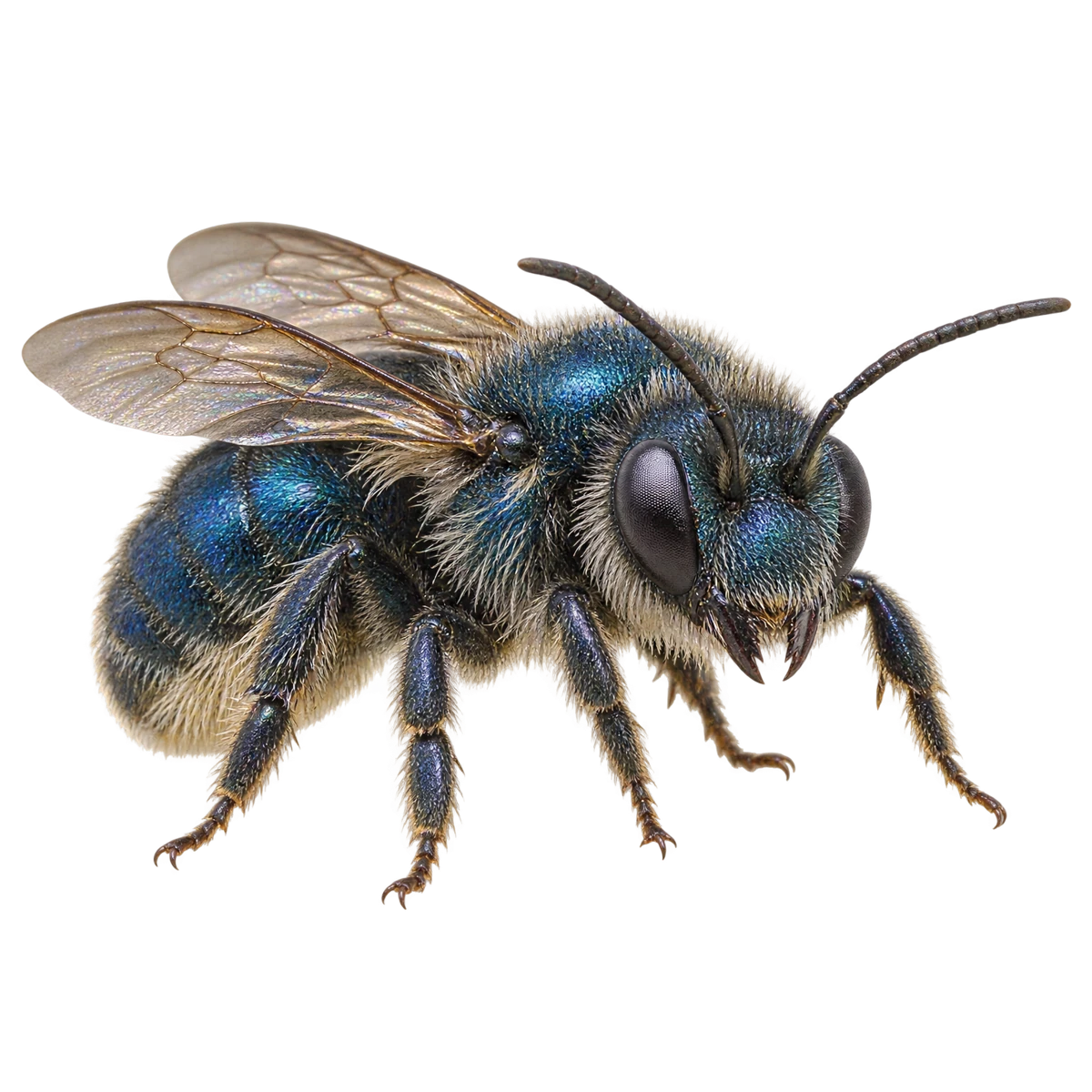
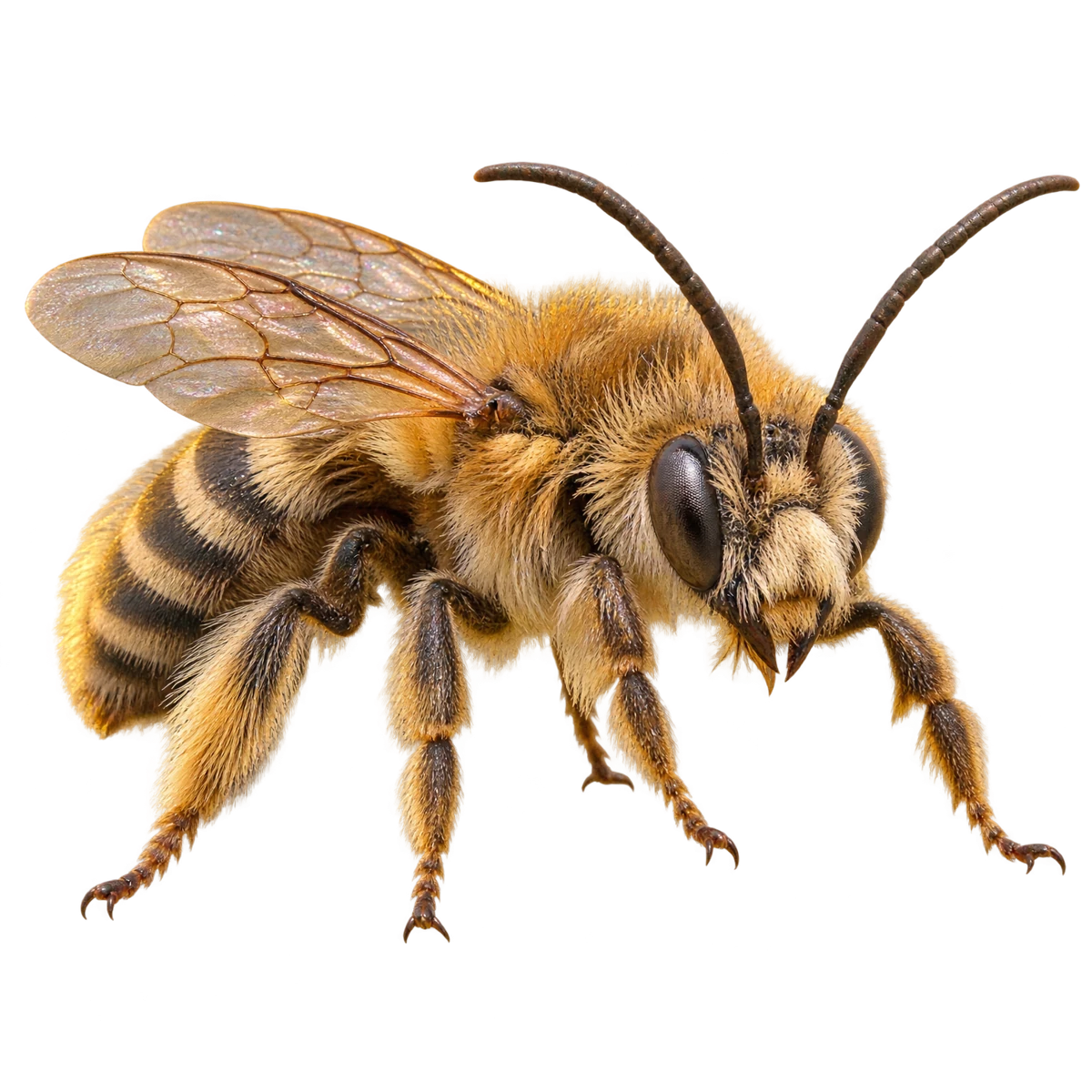
From tiny sweat bees to large bumble bees, North America is home to about 4,000 native species.
Honey bees are not native to the Americas. European colonists brought them in the 1600s.
Small bee. Big work.
One in three.
About one in three bites of food depends on pollinators.
USDA
There’s more to the buzzFeel the frequency
Buzz.
Bumble bees grab a flower and vibrate their flight muscles to shake pollen loose.
Tomatoes, peppers, blueberries and cranberries pollinate best this way. Honey bees cannot do it.
The flight controls are loading.
Where bees live
Make room for home
Room below.
About 70% of native bee species nest in the ground; most of the rest nest in hollow stems or holes in wood.
A tidy yard with no bare soil and no old stems has nowhere for them to live.
Not every bee has a hive
Leave a little wild.
Most native bees are solitary: each female builds and stocks her own nest.
A hollow stem. A hole in wood. A patch of undisturbed ground. Small spaces make a home.
Bumble bees are different. They live in colonies.
Rusty patched bumble bee · Bombus affinis
Rusty.
Look for the patch.
Workers and males have a rusty reddish patch on the back of the abdomen.
Take a closer look as she turns.
The flight controls are loading.
Bombus affinis
A future worth protecting
A familiar bee. An uncertain future.
Once common across the eastern United States, the upper Midwest and southern Ontario and Quebec.
In January 2017 it became the first bumble bee in the United States listed as endangered under the Endangered Species Act.
- Habitat loss
- Pesticides
- Disease and pathogens
- Climate change
A colony begins again
One queen. A new beginning.
Colonies start each spring from a single queen that spent the winter underground.
They need flowers from early spring to fall.
Plant a patch
A patch starts here.
Spring
- Willows
- Golden alexanders
- Wild geranium
Keep the patch blooming
Let it hum.
Summer
- Bee balm
- Purple coneflower
- Mountain mint
Through the last flowers
Keep the flowers coming.
Fall
- Goldenrod
- Asters
Your bee-friendly patch
A little less tidy. A lot more life.
Small things you can do. Tick them as you go.
Saved on this device.
A note on bee hotels
A home, not a hotel.
Tube nests must be cleaned or replaced every year, or they spread disease.
Stems and bare soil are simpler.
A little room for wild
Less tidying. More possibility.
Leave some leaves.
Leave some leaves and wood in a corner.
Grab a leaf. Let it fall. You can also focus a leaf and use the arrow keys to move it.
Sightings · North America
Who’s nearby?
Recent bee sightings, mapped.
Every point shows a species, a date and a place. Explore by bee group and month.
Live iNaturalist research-grade observations.Select a point to see its species, date and place.
About Hum
For the bees. For everyone.
Hum is a free public guide.
It sells nothing.
A guide to the native bees of North America, and how to help them in a yard, a balcony or a schoolyard.
Rooted in public knowledge
- US Fish and Wildlife ServiceRusty patched bumble bee
- USDA Forest ServiceNative bees
- Xerces SocietyHabitat guidance
- GBIF & iNaturalistSightings